When Do You Need a 400 Amp Service? A Victoria Electrician Explains
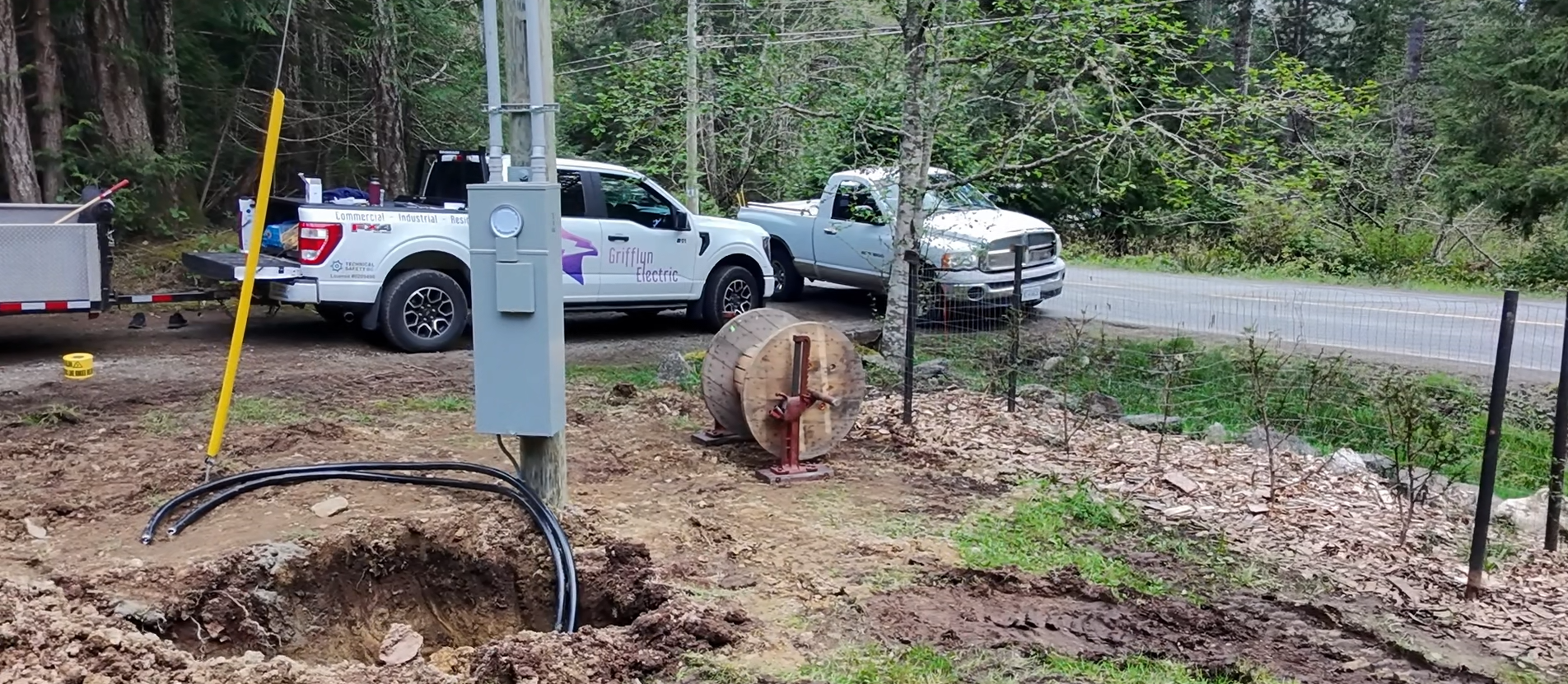
Most homes in Greater Victoria will never need a 400 amp electrical service. A properly sized 200 amp service handles a surprising amount of modern load. But there is a point where the math stops working, and once you cross it, no amount of creative panel shuffling will fix the problem. This article covers exactly where that line sits, how it is determined, and what the upgrade actually involves in Victoria.
What 400 amp service actually means
A residential 400 amp service at 120/240 volts is not simply a bigger breaker. In practice it usually means a different metering arrangement altogether. BC Hydro's standards for single 400 amp residential services generally call for current transformer based metering, where the meter reads through CT blocks rather than carrying the full current itself. You can see the detail in BC Hydro Engineering Standard ES54 S1-03, which covers single phase 400 amp and 600 amp CT based installations, and in ES54 S1-01 for multiple metered arrangements.
On the house side, that 400 amps is then normally split into two 200 amp distribution panels, or one 400 amp main with sub panels downstream. So yes, you often end up with two panels. No, installing two panels on an existing 200 amp service does not give you 400 amps. The service conductors, the meter base and the BC Hydro connection are what set your ceiling.
The short answer: a load calculation decides, not a hunch
Service size in British Columbia is determined by a calculated load under Section 8 of the Canadian Electrical Code, which is adopted in this province as the BC Electrical Code. The City of Victoria confirms the adopted edition, currently the Canadian Electrical Code Part I, 26th Edition, CSA C22.1-24.
The calculation accounts for floor area, heating and cooling, range, water heating, EV charging and other fixed loads, then applies demand factors. For an existing home, the code also allows a calculated load based on twelve months of historical consumption data under Rule 8-106(8), which is explained in the Technical Safety BC information bulletin on EV supply equipment and energy management systems. That historical data path has saved a lot of Victoria homeowners from an upgrade they did not need.
The point is simple. Anyone who tells you that you need 400 amps before running the numbers is guessing.
When a 400 amp service is genuinely the right call
1. Large homes, roughly 4,000 square feet and up
Floor area drives a meaningful portion of the calculated load. Once a home moves past about 4,000 square feet and pairs that size with electric heating, the number climbs quickly. This is the single most common reason we specify 400 amps in places like Bear Mountain, Ten Mile Point and the newer custom builds in Highlands and Metchosin.
2. A full electrification stack
One of these is fine. Three or four at once is where services fail:
- A ducted or multi head heat pump with electric backup heat
- A heat pump water heater, or worse, a tankless electric unit
- An induction range
- Two electric vehicles charging at Level 2
Homeowners switching off natural gas or oil often add all of these inside a two year window. If you are planning that path, run the load calculation before the first install, not after the third. BC Hydro publishes current heat pump rebate details that are worth reviewing while you plan.
3. A detached shop, studio or carriage house
A feeder to a detached structure is a hard load on the main service. Add a welder, a compressor, a hoist or a kiln and the sub panel out back can easily draw more than the main house. Garden suites and carriage houses have become common across Saanich and Victoria, and they frequently push a 200 amp service past its limit.
4. Pools, hot tubs and saunas stacked together
A single hot tub circuit rarely forces an upgrade on its own. A hot tub plus a sauna plus a pool heater plus an EV charger very often does. These are continuous loads with little diversity, which means the code gives you very little relief in the calculation.
5. Secondary suites and multi unit conversions
Adding a legal suite with its own metered service changes the arrangement entirely. Multiple meter installations have their own BC Hydro requirements, and a 400 amp bus feeding two 200 amp metered positions is a standard solution.
6. Commercial and light industrial buildings
Commercial kitchens, refrigeration, shop equipment and rooftop units add up fast. BC Hydro has published guidance on planning a commercial or industrial connection upgrade, and the lead times are real. Start early.
When you probably do not need 400 amps
Before spending five figures, it is worth exhausting the alternatives. A good electrician will raise these first.
- Load management for EV charging. An electric vehicle energy management system can limit charger draw so the total load stays within your existing service. Technical Safety BC sets out the requirements in its EVSE and EVEMS bulletin. This alone has prevented countless unnecessary upgrades.
- Historical demand data. If your home has twelve months of consumption history, Rule 8-106(8) may allow a calculated load well below the worst case number. Your BC Hydro usage data is available through MyHydro.
- A 200 amp upgrade instead. Many Victoria homes are still on 60 or 100 amp services. Moving to 200 amps is a far smaller project and solves the problem outright for the majority of households.
- Right sizing the equipment. A correctly sized heat pump with a modest backup element draws considerably less than an oversized unit with a large resistance strip.
What the upgrade involves in Victoria
400 amps is the dividing line at BC Hydro
This is worth understanding before you budget. BC Hydro handles straightforward connections through its express connection process, and one of the qualifying questions is whether the service is 400 amps or less. Anything above 400 amps, or requiring three phase, or needing BC Hydro equipment to be relocated, becomes a design connection project, which is a longer and more involved path.
In other words, 400 amps is often the largest service you can get without triggering a full design project. That makes it a practical ceiling for residential work.
Permits and inspection
Any work requiring BC Hydro to connect or reconnect a service needs an electrical permit. Technical Safety BC administers permits and inspections across most of the province under the Safety Standards Act, and the agency is clear that strata owners, non strata duplex owners and anyone operating a business from home cannot use a homeowner permit and must hire a licensed contractor. Grifflyn pulls the permit and coordinates the inspection on every service upgrade we perform.
Overhead or underground
Victoria has both. Overhead services carry minimum clearance, line of sight and service length requirements set out in BC Hydro's overhead and underground residential connection standards. Underground services require conduit, trenching and drainage at the building entrance. Underground is tidier and far more expensive, particularly through mature landscaping in Oak Bay or up a long driveway in the Western Communities.
BC Hydro connection charges
These are separate from your electrician's invoice. BC Hydro publishes standard connection charges by service size, with a distinct tier for services greater than 200 amps up to 400 amps. Budget for it.
What a 400 amp service upgrade costs
In Greater Victoria, 400 amp residential service upgrades typically start around $20,000 and move up from there. The spread is driven by CT metering equipment, the distance from the BC Hydro connection point, whether the service is overhead or underground, trenching conditions, how many panels are being fed and the condition of the existing grounding and bonding.
That is a real number, and it is why the load calculation comes first. We would rather tell you that a 200 amp service and a load management device solves the problem than sell you an upgrade you did not need.
Full detail on scope, process and pricing is on our 400 amp service upgrade page.
Rebates
Provincial rebate programs for electrical service upgrades have changed significantly since 2025, and eligibility now depends heavily on your existing heating fuel, your income and your municipality. Rather than quote a figure that may be out of date by the time you read this, check the current terms on the CleanBC Better Homes electrical service upgrade rebate page and speak to an Energy Coach before you book the work.
A note on older Victoria homes
A large share of our service upgrade work happens in homes built before 1960. These houses often carry a mix of original knob and tube, a mid century 60 amp upgrade and a 1990s panel change, all layered on top of each other. When we open up a service of that vintage, the upgrade frequently reveals bonding issues, undersized grounding electrodes or deteriorated service masts that need to be addressed at the same time.
That is not upselling. It is the practical reality of connecting modern equipment to a hundred year old building, and it is why we scope these jobs in person rather than quoting over the phone.
Frequently asked questions
How do I know if I need 400 amp service?
A licensed electrician performs a load calculation under Section 8 of the BC Electrical Code using your home's floor area, heating system, appliances and planned additions. If the calculated load exceeds what a 200 amp service can carry, and load management will not bring it back under, a 400 amp service is the next step.
Can I just install a second panel instead?
No. A sub panel divides the capacity you already have. It does not create more. Your service conductors, meter base and BC Hydro connection determine total capacity.
How long does a 400 amp upgrade take?
Plan for several weeks end to end. The electrical work itself is usually one to three days, but permitting, BC Hydro scheduling, inspection and any required trenching extend the overall timeline. Projects above 400 amps take considerably longer because they become design connection projects.
Will my power be off?
Yes, for part of a day while the service is cut over and inspected. We schedule the outage with you in advance and coordinate the reconnection with BC Hydro.
Is 400 amp service overkill for a normal house?
For most Victoria homes, yes. A 200 amp service combined with an energy management system handles a heat pump, an induction range and EV charging in the large majority of cases. Four hundred amps earns its place in large homes, heavily electrified properties and buildings with detached shops or suites.
Talk to an electrician who will run the numbers first
Grifflyn Electric is a licensed electrical contractor in Victoria, BC. We perform the load calculation, pull the permit, handle BC Hydro directly and coordinate the inspection. Red Seal certified journeyperson electricians work on every job, the workmanship is covered by a lifetime warranty and we answer the phone 24 hours a day.
Call (778) 350-2677 or book a time with our office. You can also read the full breakdown on our 400 amp service upgrade page.
Technically reviewed by Carl Simard, Red Seal Certified Construction Electrician (SkilledTradesBC Certificate of Qualification No. 00316-EW-26), and Behn Larsen, FSR Class B (Certificate # CEL000220404).
Grifflyn Electric Inc., 355 Catherine St, Victoria, BC V9A 3S9. TSBC Licence #LEL0209496. This article is general information and does not replace a site specific load calculation by a licensed electrical contractor.